

Walking the Labyrinth
Layers of Rest, Part Three: Emotional Rest

Emotional rest. Every time I start to write about a different layer of rest I wonder if it the layer that we most need at this time. For those of us who are exhausted by our current times, I am coming to realize it is a multi-layered exhaustion. Even though I’m addressing these one at a time, I am acutely aware that things are not quite so simple. You can read here about Mental Rest and Physical Rest. I’ll cover Social, Spiritual, Creative, and Sensory rest in the coming months. The the idea that there are 7 layers of rest originated with Dr. Saundra Dalton-Smith.
I wrote this blog post twice. I write these posts a few weeks before publishing them and the week I was writing this I was having migraines and side effects from a new migraine medication. I was tired and cranky and was putting off staring at a computer long enough to write something. By Thursday, I was feeling worried I wouldn’t get something written this week at all, so I made myself sit down and write something about emotional rest. It was uninspired and I was frustrated.
Then I woke up Friday, feeling emotionally restless. In addition to my blog post, I was frustrated by the quality of presence I was providing to my companions because of my migraines, fatigue, and a general cranky impatience with feeling unwell. I didn’t feel “in the flow” of my sessions, less attuned to those I was accompanying than I usually am, more in my head than my heart.
So I wasn’t surprised when I woke up feeling really restless, wrestling with something I couldn’t quite name. I had been experiencing it all week. It wasn’t just an emotional restlessness. As with all things, there were others woven in too… spiritual and physical, probably mental too. I had to do something.
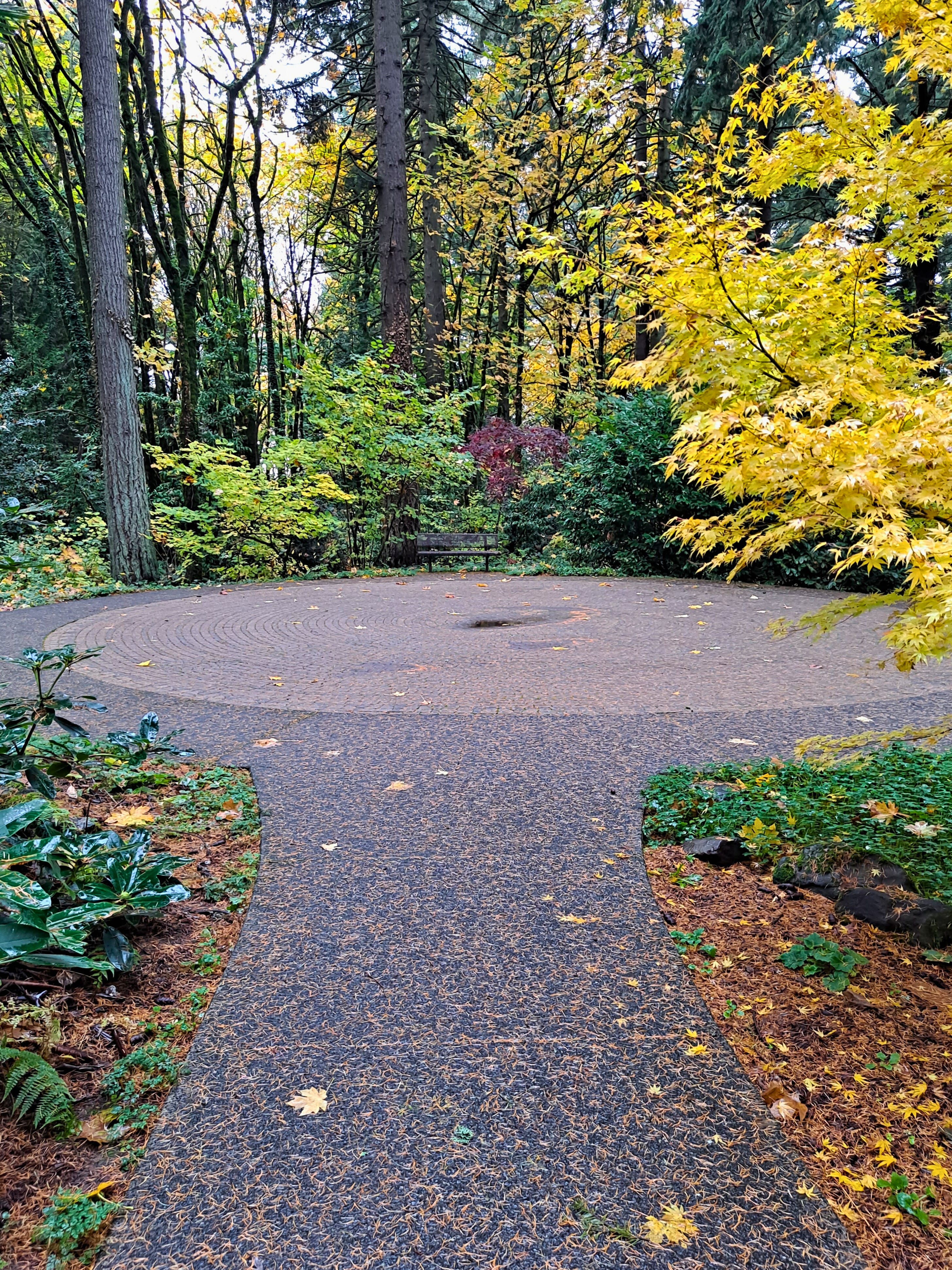
More than a decade ago, long after I had stepped away from the Catholic faith I grew up with, I found solace in meditating with the labyrinth. I have most often found them on the grounds of a Catholic convent or monastery but they are not exclusive to Catholicism or even Christianity. A labyrinth is a single, winding path that leads to a center and then back out again. Unlike a maze, which has dead ends and choices to confuse you, in a labyrinth, there is only one way in and one way out. You can’t get lost. You simply keep walking and trust the path to bring you where you need to go.
In spiritual and contemplative settings, people walk labyrinths to process change, seek clarity, grieve, pray, or simply to be present. The path becomes a metaphor for walking through uncertainty, staying open to discovery, and allowing movement itself to become prayer.
During times a personal uncertainty, restlessness, transition, or grief, walking the labyrinth has become a trusted practice for me. And although it has always been something I did while on personal hermitage or group retreats, I knew when I woke up Friday morning that I couldn’t wait for a retreat. Once I decided that I needed to go, it didn’t take long for me to get ready and head out the door to the Grotto, a local botanical garden and Catholic shrine that is open to the public but also, gloriously, contains a large labyrinth.
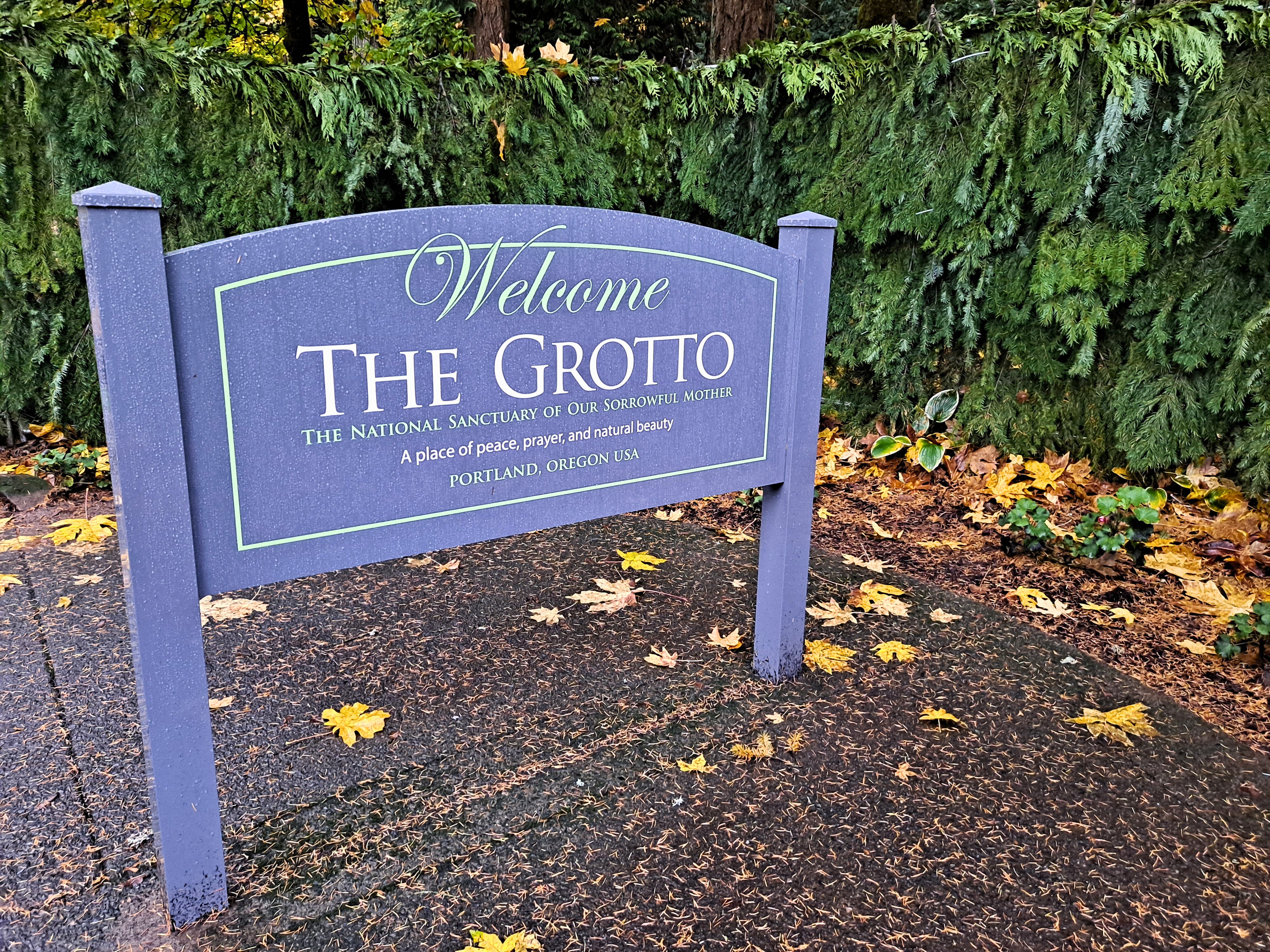
The Way I Walk the Labyrinth
I stand at the entrance, allowing myself to notice what is taking up space within. I allow those things to surface and formulate a single question, an open ended one that does not have a preconceived answer.
Who am I meant to be?
Where am I meant to go?
What am I meant to do?
How should I process this?
What is going on with me?
Why do I feel this way?
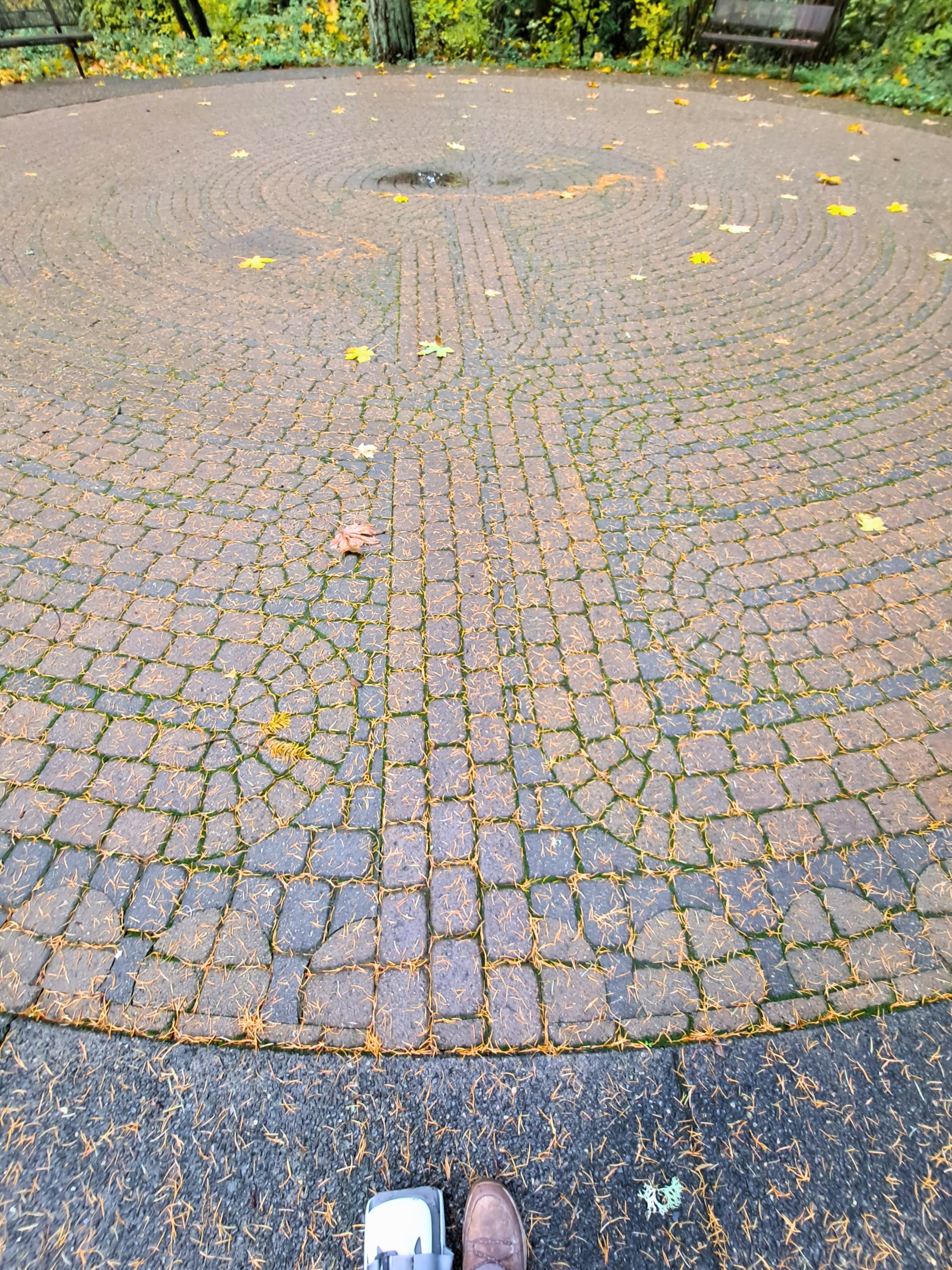
I take my question into a place of stillness within and step into the labyrinth. My walk towards the center is a journey towards my center.
I walk very slowly in a walking meditation that I first learned from Thich Nhat Hahn, feeling the way each foot moves through the space and contacts the ground. Breathe in. Heel, forefoot, toes. Breath out. Heel, forefoot, toes. My eyes remain on the ground, only focused enough to stay on the path.
On the way towards the center of the labyrinth I meditate with my question, noticing what is rising within me to greet it. Questions, emotions, memories, and the stories I tell myself. When I lose my pace, speeding up along with my thoughts, I stop and take three breaths, then continue at my original slow pace. When my mind starts to wonder, I stop at a bend in the path, look up, remind myself of my question, take three slow breaths, and continue. As I continue, I eventually notice the wisdom rising within me in the form of a short phrase.
Be who you are.
You are enough.
You are loved.
I take the phrase that rises and invite it into the stillness within, repeating it as a mantra and contemplating Why these words? I notice what rises to greet it, both the internal resonance and the internal objections. I trust the words to be true. By the time I have reached the center, I have usually found peace with my question and my wisdom.
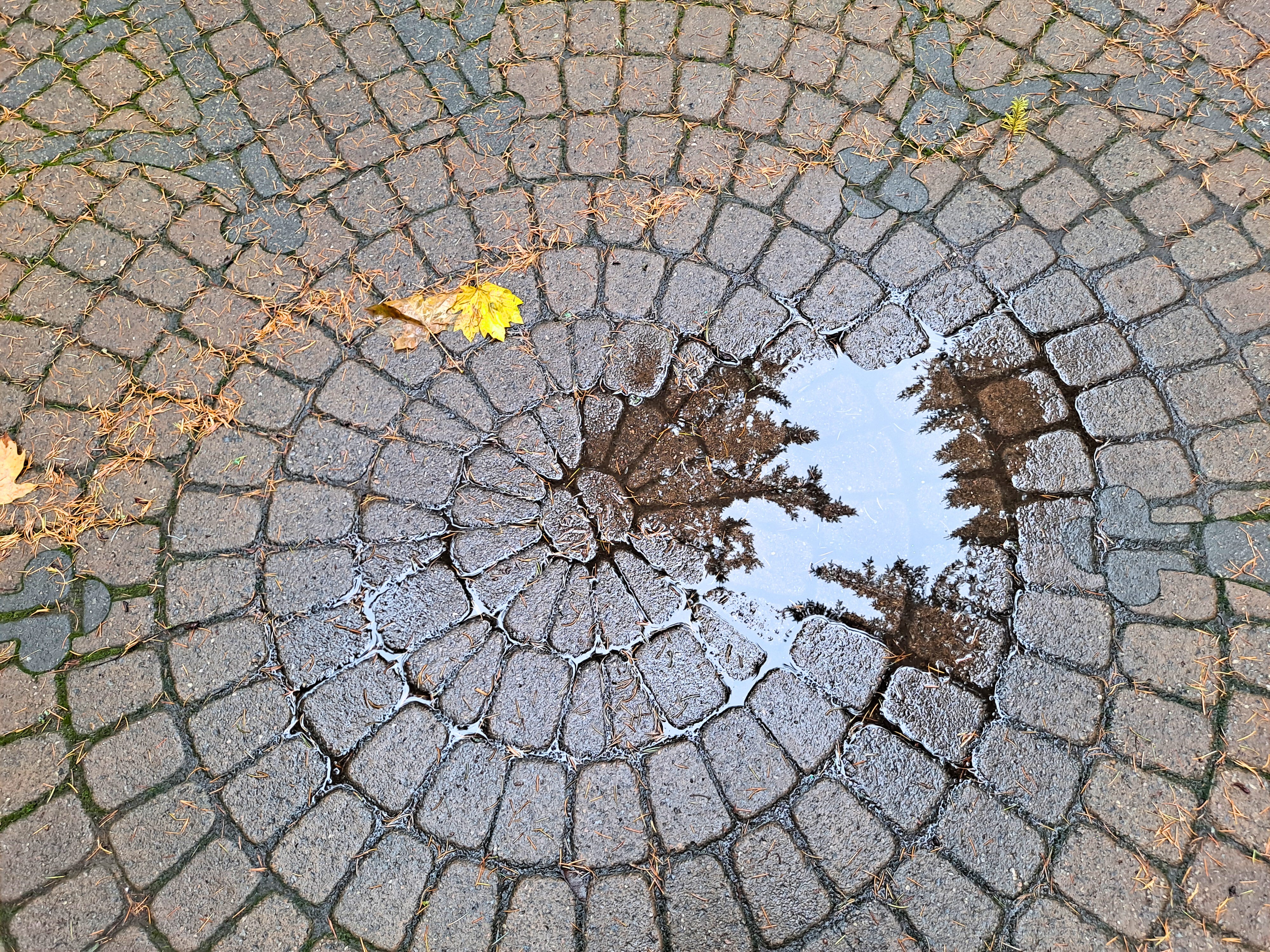
My way out of the labyrinth is way of transitioning back into the world. I’ll start by reorienting my senses to what is around me. I take in the air, noticing its temperature and humidity and the way it touches my skin. I breathe deeply the scents of the natural world and listen for the sounds of weather and animals… rain drops on leaves and birds singing. I take in what my eyes did not notice on my way in. I’ll remember what it is like to be engaged outwardly again, shaking loose the focus of my journey inward (this particular time, no one was around, so I did a full body shimmy, shaking everything loose from head to toe). If there are no others using the labyrinth, I’ll start a slow journey out along the path. Not as slow as the walking meditation, but certainly leisurely, continuing my noticing with my senses, my eyes no longer focused solely on the path but on the world around me. If others are using it, I walk directly out without following the path or disrupting another’s journey.
I sit by the labyrinth and journal. Writing down what came up to greet my question and what wisdom I had gathered during the process. When things feel complete, I express gratitude for this space and I continue with my day.
My phrase this time? Let it go.
What question would you carry into the labyrinth?
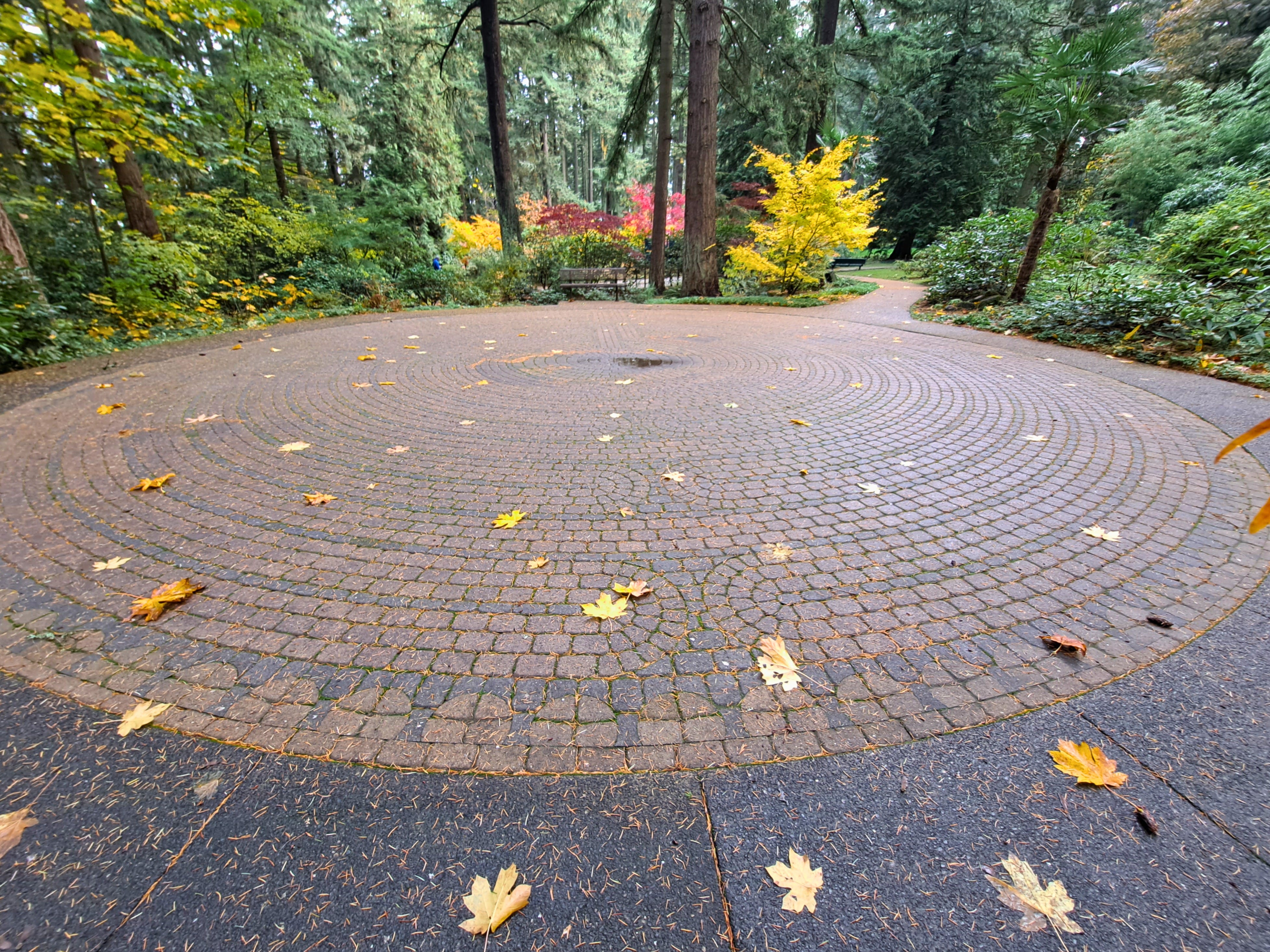
The first phrase that ever came to me in a labyrinth, Be who you are, always comes back to me when I walk it again. Be who you are, you are enough. Be who you are, you are loved. As expected, it rose up within me this time as well but I dismissed it, thinking it didn’t really apply to this situation. Too quickly, I discovered. The next morning, I woke up and journaled for an hour about being who I am in my companioning practice.
Be who you are. Let it go.
If you’d like to offer support without signing on for anything ongoing, you’re welcome to drop a little something in the jar.
Book a session with me
Spiritual companioning is a supportive, non-religious space to explore what gives your life meaning and grounding.
It’s a conversation-based practice where you’re invited to slow down, pay attention to your inner life, and notice what feels true, steady, or alive for you. You don’t need any particular beliefs. My role is simply to listen with care, ask thoughtful questions, and help you make sense of your own experience. It’s a space for reflection, curiosity, and discovering your own path.
Wildbody companioning is a supportive, body-centered practice that helps you gently re-friend your body.
It’s a space to slow down and notice what’s happening inside you without judgement, your sensations, tension, ease, or fatigue. There’s no agenda and nothing you have to fix. My role is to offer grounded presence, simple prompts, and curiosity so you can reconnect with your body in a way that feels safe and doable. It’s about rebuilding trust with yourself, learning your own signals, and finding a more compassionate way of being in your body.